ODosta Inc. Create Your Own Tech World

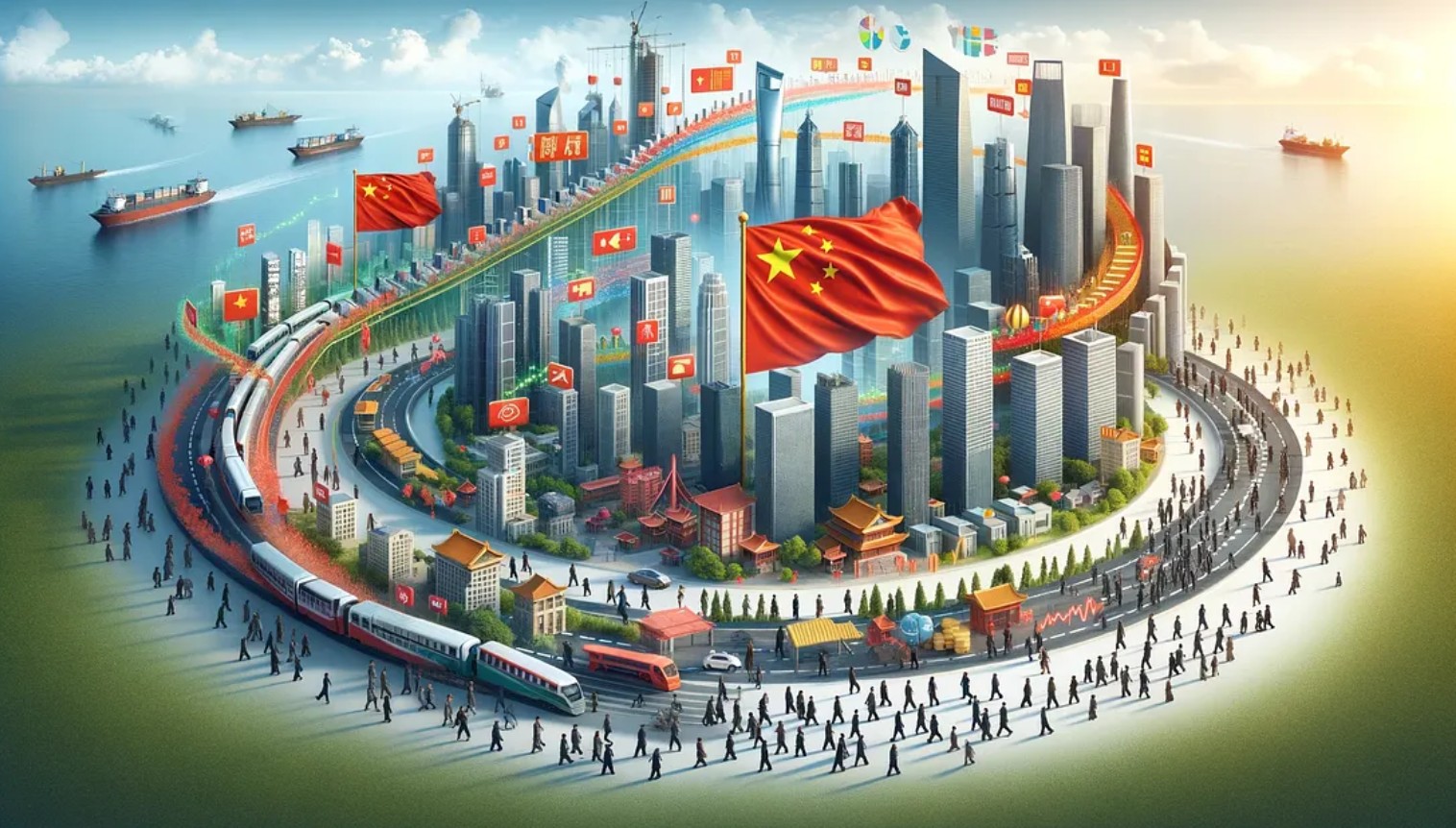
Over the past four decades, China has undergone a transformation so vast and rapid that it has no real historical parallel. In the span of a single lifetime, an impoverished, inward-looking communist country became one of the central engines of the global economy. The speed, scale, and depth of this change have reshaped not only China, but the balance of power in the world.
The question is no longer whether China has risen but how it managed to do so, and what that rise means for the future.
How China Got Rich From Isolation to Global Power in Just 40 Years
A Civilization Interrupted
For more than a thousand years, China stood among the world’s most advanced civilizations. Yet from the 17th century onward, it gradually turned inward, confident in its self-sufficiency and dismissive of Western technology. That complacency proved costly.
What followed is remembered in China as the “Century of Humiliation” a period marked by colonial intrusion, internal rebellion, Japanese invasion, and civil war. World War II alone claimed the lives of roughly 14 million Chinese. By the mid-20th century, the country was devastated, its countryside impoverished, and its modernization repeatedly interrupted.
The communist victory in 1949 promised stability, but economic mismanagement soon led to catastrophe. The Great Famine and the Cultural Revolution left the nation traumatized. Universities closed. Traditional culture was attacked. Millions of young people were sent to the countryside. By the early 1970s, China was exhausted and desperate for a new path.
Deng Xiaoping and the Decision to Change Course
That turning point arrived with Deng Xiaoping. A veteran revolutionary who had twice been purged and exiled, Deng was not an ideologue. He was a pragmatist shaped by hardship, reflection, and experience beyond China’s borders. Deng concluded that rigid ideology had crippled the economy. In the 1970s, China remained overwhelmingly rural, with nearly 80 percent of its population working the land and living in poverty. Hunger was a constant companion for millions.
When Mao Zedong died in 1976, Deng returned to power determined to shift China’s priorities. His goal was simple but radical: prosperity. Stability would still be maintained through one-party rule, but the era of permanent revolution would end. As Deng famously declared, “It doesn’t matter whether a cat is black or white, as long as it catches mice.”
Education: The First Breakthrough
One of Deng’s most transformative decisions was to restore the national university entrance examinations in 1977. During the Cultural Revolution, higher education had all but collapsed, depriving an entire generation of opportunity. The reinstated exams were open, competitive, and merit-based. Millions applied; fewer than five percent were admitted. Farmers, factory workers, soldiers, and former “sent-down youth” sat side by side. For a society that had always revered learning, this moment marked a profound psychological shift.
Education once again became a pathway to mobility, talent was rewarded, and the foundations of modern China’s human capital were laid.
Seeing the World and Learning From It
Deng understood that China could not modernize in isolation. Fact-finding missions were sent to Europe, Japan, Singapore, and the United States. What they discovered was sobering: capitalist countries were not decadent failures, but technologically advanced and materially prosperous.
Japanese factories filled with robots, modern steel plants, and electronics companies stunned Chinese officials. Deng insisted that Chinese citizens be shown how ordinary people lived abroad. Televised images of refrigerators and televisions in Japanese homes had a profound impact on a population that lacked basic consumer goods.
China had fallen far behind and now it knew it.
Reform From the Ground Up
Change did not come only from Beijing. In rural Anhui province, desperate farmers quietly dismantled the collective farming system, dividing land among families and selling surplus produce. Their secret “life-or-death” contract was illegal, but it worked. Productivity soared. Rather than crush the experiment, Deng embraced it.
This approach test locally, expand if successful, retreat if necessary became the hallmark of China’s reforms. It allowed innovation without threatening political control.
Special Economic Zones: Opening the Valve
The boldest experiment came with the creation of Special Economic Zones (SEZs), starting in places like Shenzhen, then little more than a fishing village across from Hong Kong. These zones allowed foreign investment, private enterprise, and market forces to operate within tightly defined boundaries.
The results were explosive. Hong Kong manufacturers moved production across the border, drawn by cheap labor and new freedoms. Success spread from region to region, becoming a national model.
What began as an exception became the rule.
A Hybrid System Unlike Any Other
China did not abandon socialism it reengineered it. The state retained political control and the ability to mobilize resources for massive infrastructure projects. At the same time, it unleashed private enterprise, local initiative, and competition.
This hybrid system baffled Western economists. It defied the assumption that markets required liberal democracy. Yet it worked spectacularly. Small businesses flourished. Urbanization accelerated. A rural worker moving to a city factory could see productivity rise twentyfold. China’s GDP grew nearly seventy times in forty years.
Investing in People
Recognizing that growth depended on talent, China sent hundreds of thousands of students abroad, especially to the United States. Leaders accepted the risk that many might not return, believing that even a fraction would be enough.
At home, massive investment in primary and secondary education, especially for girls reshaped society. Opportunities once denied by geography or gender gradually opened.
Human capital became China’s most valuable resource.
Globalization, Influence, and the Next Frontier
As China integrated into global markets, its companies followed. Firms like Alibaba were global from day one, serving small businesses worldwide. A massive middle class, now roughly 400 million strong driving consumption, innovation, and technological adoption.
China also began exporting influence. Its manufacturing reshaped global supply chains. Its market power affected culture, from Hollywood films to consumer trends. And its ambitions expanded into infrastructure through projects like the Belt and Road Initiative. Looking ahead, artificial intelligence represents the next great arena. With vast data resources, strong state support, and deep investment, China is positioning itself as a global AI leader alongside the United States.
At the same time, China has turned environmental necessity into opportunity, becoming a major investor in green technology and climate solutions.
An Unresolved Tension
Despite its economic success, China’s political system remains centralized and authoritarian. Western observers often predict that this contradiction will eventually halt progress. So far, those predictions have been wrong.
For many Chinese citizens, rising living standards, mobility, and personal freedoms travel, education, consumption, have reinforced confidence in the system that delivered them. Whether this model can sustain innovation while maintaining ideological control remains an open question.
A Transformation Still Unfolding
Forty years ago, China was poorer than many African nations. Today, it is the world’s second-largest economy by nominal GDP and the largest by purchasing power parity.
China’s rise was not inevitable. It was the result of pragmatism, experimentation, investment in people, and a willingness to abandon dogma in favor of results. The transformation is not complete but history has already been rewritten.