ODosta Inc. Create Your Own Tech World

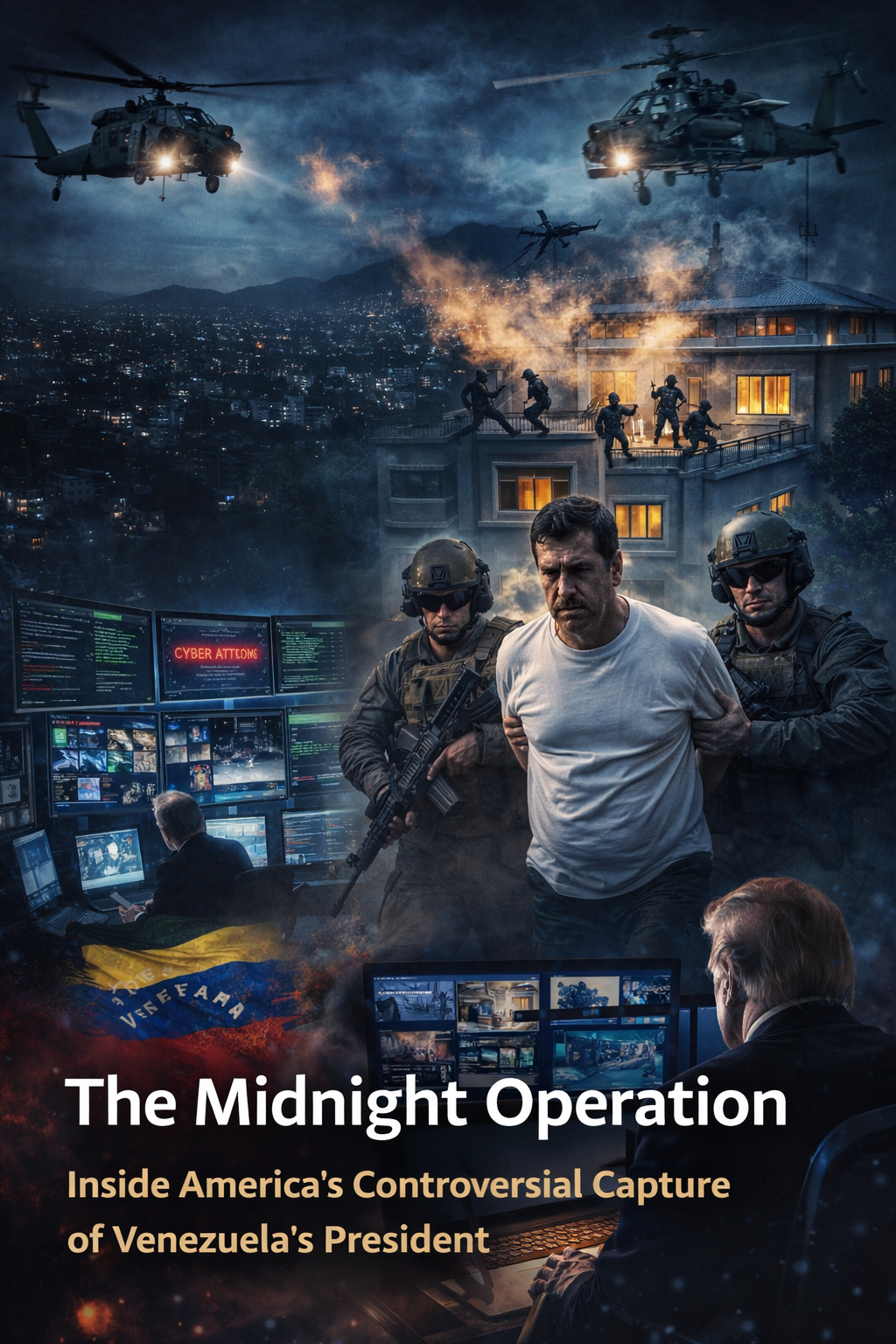
On the early hours of January 3rd, 2026, in a dimly lit room in Florida, the glow of screens illuminated one of the most powerful men in the world: US President Donald Trump. But this wasn’t a movie marathon or a late-night news binge. Trump was watching something far more consequential, a live military operation unfolding thousands of miles away, in Caracas, Venezuela.
At that very moment, Venezuelan President Nicolas Maduro was fast asleep in his residence, unaware that a meticulously planned operation was about to change the course of his life and global geopolitics.
Precision in Darkness: The Operation Begins
Months before, the CIA had quietly infiltrated Venezuela, gathering intelligence on Maduro’s routines, residences, and even his personal habits. The agency had an insider within the government, providing real-time updates about the President’s whereabouts. By November 2025, Trump had even personally warned Maduro to relinquish power, offering him a path to avoid confrontation but Maduro refused.
The operation, code-named “Absolute Resolve”, combined advanced technology and elite military precision. On the night of January 2nd–3rd:
-
Cyber attacks cut off Caracas’ power grid, plunging the city into darkness.
-
Helicopters, flying just 100 feet above the ocean, entered Venezuelan airspace undetected.
-
Delta Force commandos descended onto Maduro’s residence, breaching the building silently.
Within five minutes, Maduro, attempting to flee to a reinforced safe room, was captured and flown to the USS Iwo Jima, then later transferred to Guantanamo Bay, and eventually to Stewart Air National Guard Base, New York. Photos of the detained Venezuelan president on American soil sent shockwaves around the globe.
The Strategic Motive: Oil Over Drugs?
Officially, the US justified the operation as a crackdown on drug trafficking, claiming Maduro and his wife were involved in narco-terrorism and cocaine smuggling. However, upon closer analysis, these claims appear inconsistent:
-
Venezuela is a minor transit country for cocaine, with the majority of shipments going to Europe, not the US.
-
The major source of drugs causing fatalities in America, fentanyl, comes from Mexico and China not Venezuela.
Experts and analysts suggest the true motivation was oil. Venezuela holds 303 billion barrels of proven crude oil reserves, the largest in the world. The heavy, sour oil produced there is critical for diesel, industrial fuel, and asphalt, commodities the US refineries depend on.
Historically, Venezuela’s nationalization of oil under Hugo Chavez and Maduro’s continued state control angered American oil interests, who lost direct access to these resources. Trump himself later called Venezuela’s refusal to hand over oil “the greatest theft in the history of America.”
A Question of Legality and Global Precedent
Legally, the operation raises serious concerns:
-
International Law: Article 2(4) of the UN Charter prohibits military force against sovereign nations. This operation directly violated these rules.
-
US Law: The American Constitution requires Congress approval for acts of war. Trump bypassed this, framing the mission as law enforcement.
The aftermath triggered international outrage. Countries across Latin America, Europe, and Asia condemned the action. UN Secretary-General Antonio Guterres declared it a violation of international law. Critics have labeled it “New Age Colonialism”, citing the operation as a clear seizure of a country’s resources under the guise of law enforcement.
The Human Cost
While the operation was successful in capturing Maduro, it was not without consequences. At least 40 people died during the raid, and the city of Caracas endured cyber attacks and airstrikes that disrupted civilian life.
The rapid succession of events, from cyber attacks, low-flying helicopters, and Delta Force commandos to Maduro’s transfer to US soil, underscores the unprecedented scale of modern military operations.
Beyond Venezuela: A Dangerous Global Message
Trump’s actions have set a new precedent in geopolitics:
-
He has openly threatened countries like Colombia, Cuba, Mexico, and even India regarding oil and trade policies.
-
Powerful nations may now feel emboldened to take unilateral military action, bypassing international laws and agreements.
-
This challenges the very foundations of the post-World War II rules-based order.
If such precedents continue unchecked, the world risks a destabilized international system, where might makes right, and smaller nations live under constant threat of intervention.
Conclusion: Power, Resources, and the Limits of Law
Whether Maduro was a dictator or not is a separate matter. What cannot be ignored is that the kidnapping of a sitting president from his home, conducted without international approval or legal backing, marks a dangerous turning point in global politics.
The operation highlights the intersection of power, resources, and lawlessness, showing that nations with overwhelming military capabilities may act with impunity. As history has repeatedly shown, such actions can have long-term consequences for international stability.
Key Takeaways:
-
The US operation against Maduro was meticulously planned months in advance, involving cyber warfare, intelligence, and elite military units.
-
Official reasons like drug trafficking are questioned; underlying motives, notably oil, may have driven the decision.
-
The operation violated international law and US constitutional procedures, sparking worldwide criticism.
-
The broader implications suggest a new era where global rules may be dictated by the strongest, not the lawful.
This blog post not only narrates the drama of the operation but also examines the geopolitical and legal implications, providing readers with a full picture of one of the most shocking events in modern history.