ODosta Inc. Create Your Own Tech World

Los Angeles, California, is often associated with Hollywood glamour, sun-soaked beaches, and the entertainment industry. But hidden behind the glitz and glimmer lies a starkly different reality: Skid Row, a neighborhood in downtown Los Angeles that is home to one of the largest populations of homeless people in the United States.
The Heart of Skid Row
Skid Row spans approximately 50 city blocks, nearly one square kilometer, and is home to over 6,000 people living on the streets, in tents, and makeshift shelters. In the broader Los Angeles area, more than 116,000 individuals remain unsheltered, seeking refuge wherever they can. People are drawn to California not only for its economic opportunities California has the fourth largest economy in the world, surpassing Japan in 2024 but also for its mild, year-round climate. Unfortunately, these same conditions have made Skid Row a magnet for those with nowhere else to go.
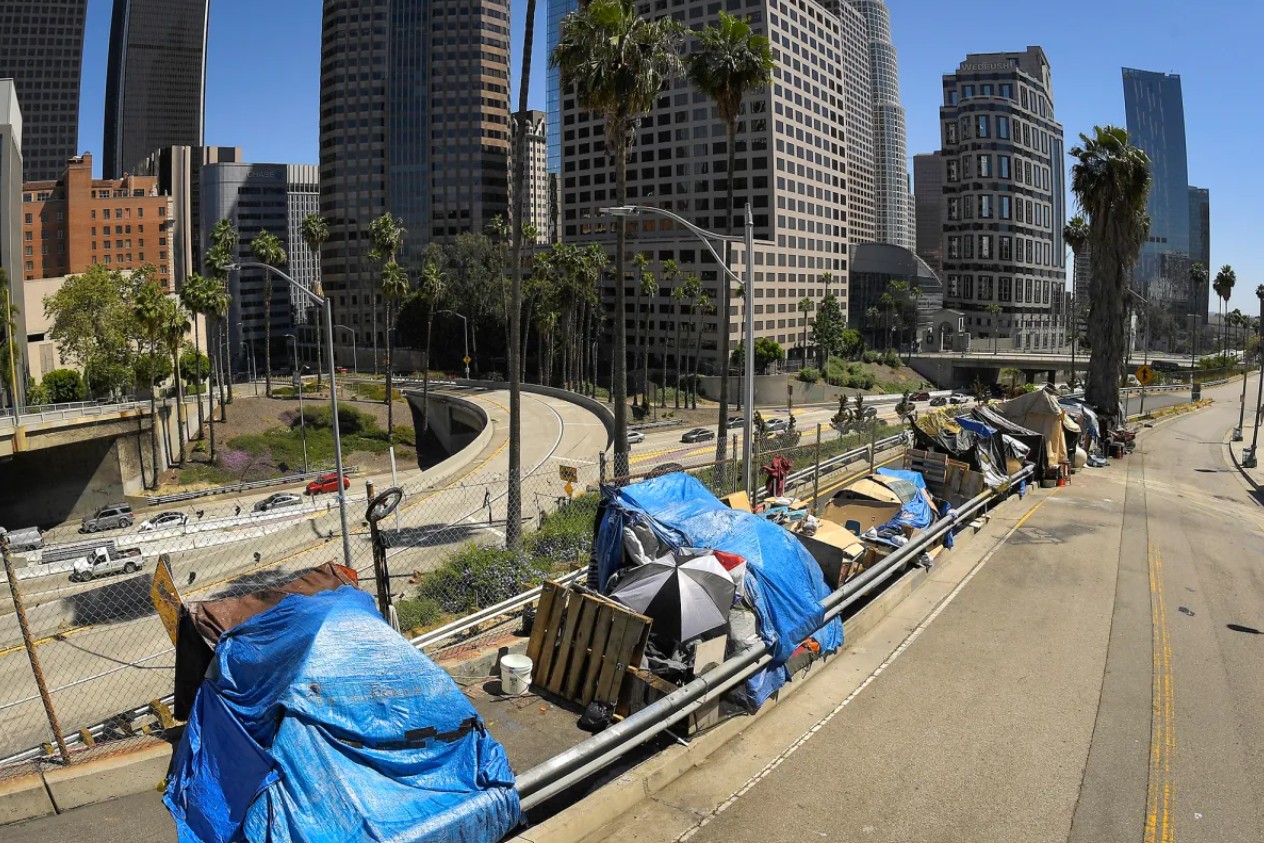
This neighborhood is not just a street it is an entire ecosystem of poverty, addiction, mental illness, and social marginalization. It is home to veterans, former inmates, and people abandoned due to illness, debt, or personal misfortune. Each individual has a story, a past, and often a heartbreaking journey that led them here.
Behind the Tents: Stories of Struggle
Walking through Skid Row, one cannot help but notice the resilience of its residents. Many are seeking a fresh start, despite being caught in a relentless cycle of hardship. Others struggle with addiction, mental illness, or lack of social support. Veterans who served their country find themselves abandoned, without the aid they need to reintegrate into civilian life. Former inmates are often released without housing, while everyday citizens who lose jobs or face financial crises may also end up on the streets.
Even in these challenging circumstances, there are small efforts to maintain dignity and safety. For instance, some individuals use designated bins for used syringes to prevent the spread of disease—a sign of personal responsibility in a system that often fails them.
Organizations and Support Systems
Skid Row is also home to many organizations providing food, clothing, and shelter. One of the largest facilities has 300 beds for people choosing to leave drugs behind, offering a safe environment and hope for recovery. However, questions remain: Do these organizations provide lasting solutions, or are they merely temporary relief within a broken system?
Despite significant government funding, systemic issues persist. The United States, a nation of immense wealth and resources, struggles with unfair housing policies, a lack of comprehensive healthcare, and a capitalist system that often leaves the vulnerable behind. Skid Row is a glaring illustration of these disparities.
Contrasts and Irony
The juxtaposition within Skid Row is striking. Luxury and poverty coexist within a few blocks. For instance, it is not uncommon to see individuals using drugs inside expensive cars, while nearby, families and veterans live in torn tents on filthy sidewalks. This contrast underscores the inequality and uneven distribution of resources in one of the world’s richest nations.
Observations and Takeaways
Visiting Skid Row offers a sobering look at the human consequences of systemic neglect. Beyond the statistics and headlines, there are untold stories of struggle, resilience, and loss. From veterans seeking support to families trying to survive, every resident represents a story that challenges assumptions about homelessness.
The work of nonprofits, government organizations, and volunteers is vital, but the scale of the problem requires broader societal solutions, better housing policies, healthcare access, mental health support, and addiction treatment. Skid Row is not just a neighborhood; it is a mirror reflecting the gaps in America’s social safety net.
Final Thoughts
In the heart of Los Angeles, amid dazzling city lights and global fame, Skid Row reminds us that wealth does not guarantee equity, and prosperity does not protect the vulnerable. It is a call to action, a plea for empathy, and a challenge to rethink how societies care for their most marginalized members.
Special thanks to Kevin, the expert who guided this exploration, and Shadi, the owner of Image One in California. Their insights shed light on the human stories behind the statistics, helping us understand the full complexity of life on Skid Row.
If you found this exploration insightful, consider subscribing to the channel, your support helps spread awareness about these pressing social issues.