ODosta Inc. Create Your Own Tech World

In 1965, Singapore looked like a country destined to fail. It was plagued by poverty, unemployment, drug addiction, ethnic violence, crime, overcrowding, and illiteracy. Slums dominated the landscape. Riots were common. There were no natural resources, no army, and barely any land. Even its own leaders doubted whether the country could survive and yet, within just 25 years, Singapore stunned the world.
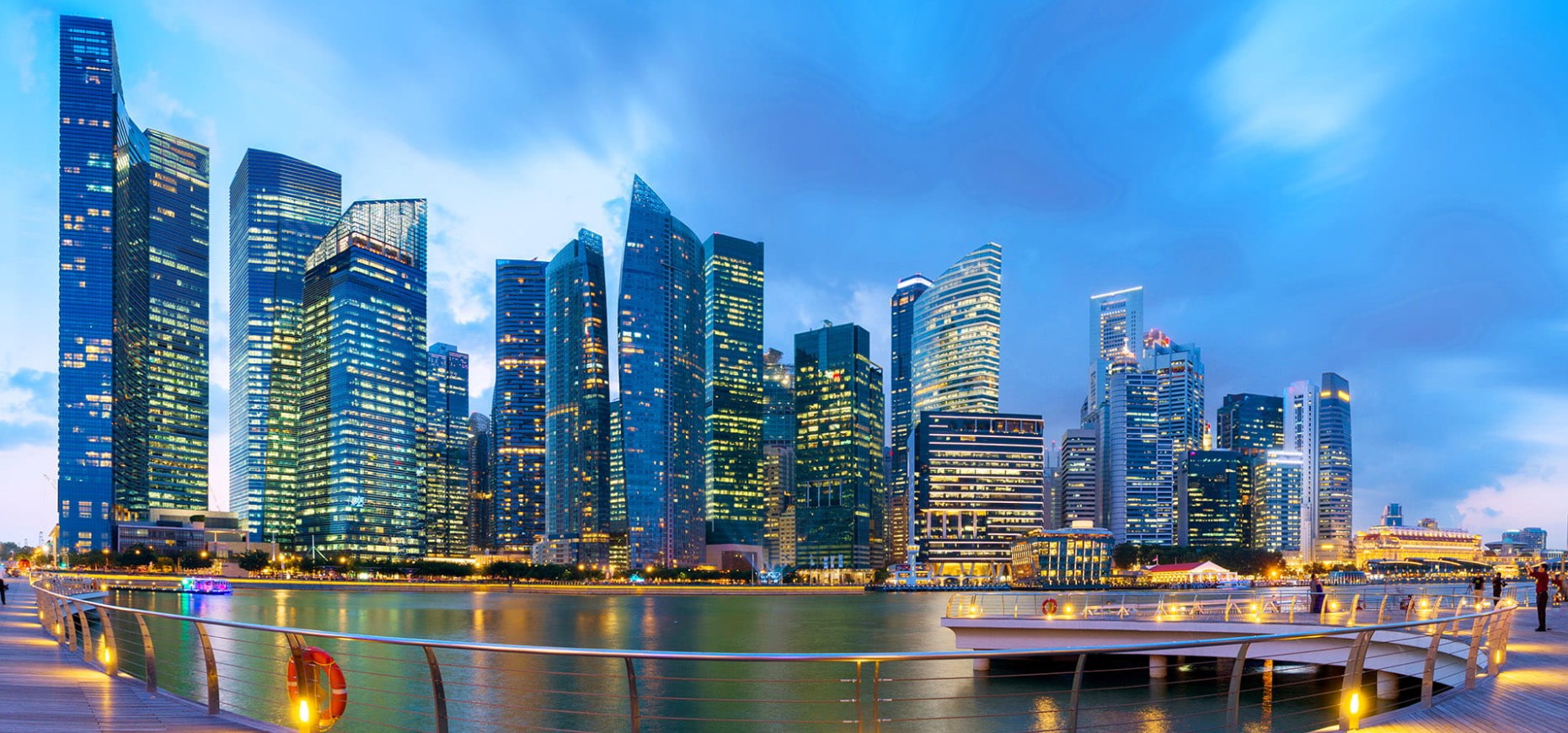
Today, it is one of the richest nations on Earth, among the cleanest and safest, with near-zero corruption, world-class infrastructure, and a standard of living that rivals the most advanced Western economies.
How did this happen? Was it luck? Geography? Or something far more deliberate?
How a Broken Island Became One of the World’s Richest Nations
This is the story of Singapore’s transformation and the leadership that made it possible.
A Tiny Island with Enormous Problems
Singapore is one of the smallest countries in the world. With a total area of about 710 square kilometers, it is roughly half the size of Delhi. Yet nearly 5.7 million people live on this tiny island, giving it a population density of over 8,000 people per square kilometer about 18 times higher than India’s.
Despite this, Singapore is not a symbol of chaos or congestion. Instead, it functions with remarkable efficiency. The name “Singapore” itself comes from the Sanskrit words Singh (lion) and Pura (city), meaning “The Lion City.” Fittingly, it went on to become one of the famed Four Asian Tigers, alongside South Korea, Taiwan, and Hong Kong countries that achieved rapid development despite high population density.
Singapore’s population is also deeply diverse. Ethnically, about 74.5% are Chinese, 13.5% Malay, 9% Indian, and the rest Eurasian and Arab. Religiously, people from all major faiths live side by side, along with a significant atheist population.
But this harmony did not come naturally.
A Troubled Past: Trade, Colonisation, and Addiction
For centuries, Singapore served as a trading post for Malay, Indian, Arab, Chinese, and European merchants. In 1819, the British East India Company under Sir Stamford Raffles turned it into a free port, allowing ships to trade without fees. This decision transformed Singapore into a regional trading hub.
The opening of the Suez Canal in 1869 further increased maritime traffic, strengthening Singapore’s importance. Nearby Malaya produced tin and rubber, and Singapore became a processing center But there was a dark underside.
The British cultivated opium in Bengal and processed it in Singapore, employing Chinese laborer. Isolated from families and community, many workers became addicted. By the 1940s, tens of thousands of opium addicts lived in Singapore, fueling crime, theft, and social collapse.
War and Destruction
World War II shattered what little stability remained.
In February 1942, the Japanese invaded Singapore, forcing the British to surrender. Over the next three and a half years, the island descended into horror. Civilians were massacred. Prisoners of war were tortured. Thousands were forced into labor. Women were trafficked into “comfort stations.”
When the Japanese withdrew in 1945, Singapore was devastated its buildings destroyed, economy ruined, diseases rampant, food scarce, and society broken.
Singapore had effectively become a slum.
The Birth of a Nation and a Crisis
After the war, the British returned but gradually moved toward self-governance. Elections were held, and in 1959, a young and brilliant lawyer named Lee Kuan Yew became Prime Minister as leader of the People’s Action Party (PAP).
At first, Lee believed Singapore could not survive alone. In 1963, he merged Singapore with Malaysia. The experiment failed. Political rivalry, revenue disputes, and ethnic discrimination, especially Malaysia’s policy of granting special privileges to Malays, led to unrest. Racial riots erupted in 1964. In 1965, Singapore was expelled from Malaysia and forced into independence.
Lee Kuan Yew famously wept on television. Singapore was now alone without resources, without an army, and with British troops preparing to leave by 1971.
Leadership Under Pressure
Lee Kuan Yew had four years to save his country.
He began with security and diplomacy. Singapore co-founded ASEAN in 1967 to promote regional stability. That same year, National Service was introduced, making military training compulsory for young men to ensure defiance readiness.
Next came education. High-quality, low-cost public education became universal. Vocational training was prioritized, ensuring students gained practical skills aligned with industry needs.
Lee understood a simple truth:
Human capital would be Singapore’s only natural resource.
Building Unity in a Divided Society
Singapore’s greatest internal threat was communal division. To prevent ethnic ghettos, the government introduced the Ethnic Integration Policy, ensuring that public housing reflected the country’s ethnic proportions. Chinese, Malay, and Indian families lived side by side—not by chance, but by design. Religious harmony was reinforced through laws, councils, and cultural practices like Racial Harmony Day, where schoolchildren learn about each other’s traditions from an early age.
Unity was not left to slogans, it was engineered through policy.
Cleanliness, Housing, and Urban Order
Lee Kuan Yew believed cleanliness reflected civilization. Nationwide cleanliness campaigns were launched, backed by strict laws and heavy fines. Chewing gum was banned. Littering and spitting were punished severely. Waste management, public toilets, and recycling systems were modernized.
Slums were cleared. Over 26,000 families were relocated into high-rise public housing equipped with water, electricity, and gas. Today, about 80% of Singaporeans live in government-built homes, and homelessness is almost nonexistent. Urban planning extended to relocating hawkers into organized food centers, cleaning rivers, relocating polluting industries, and expanding green spaces.
Healthcare, Transport, and Livability
Singapore created an efficient healthcare system supported by Medisave, Medishield, and Medifund, making quality care affordable. To conserve land, car ownership was heavily taxed, while public transport was made cheap, clean, and reliable. Singapore discouraged private excess and rewarded collective efficiency.
The Economic Engine: Discipline and Enterprise
Singapore kept income taxes relatively low between 2% and 24% yet consistently ran budget surpluses. How?
Through state-owned but professionally managed enterprises like Temasek Holdings, which invests globally and generates massive returns for the government. Strategic taxes on vehicles, property, wealth, and consumption also supported public spending. Citizens were encouraged to save through the Central Provident Fund, contributing to one of the highest national savings rates in the world.
Opening to the World
Lee Kuan Yew combined state investment with aggressive openness to foreign capital. Singapore built world-class ports, airports, and industrial zones. Bureaucracy was slashed. Corruption was eliminated. Singapore became one of the easiest places in the world to do business and remains among the least corrupt countries globally.
Government officials and ministers were paid high salaries to remove incentives for bribery. At the same time, corruption laws were ruthless. The Corrupt Practices Investigation Bureau operated independently, even investigating senior officials when necessary.
From Factories to High Technology
Singapore began with textiles and refineries but deliberately moved up the value chain. Employers funded skill development. Workers were continuously retrained.
By the 1990s, Singapore was a global hub for electronics, semiconductors, aerospace, pharmaceuticals, petrochemicals, and biotechnology, industries requiring skill, not natural resources.
A Leader Without a Cult
Despite transforming a nation, Lee Kuan Yew never built statues or monuments to himself. There are no grand memorials, no personality cult.
He ruled firmly, sometimes harshly and restricted press freedom. Many describe him as a benevolent authoritarian. But he held himself accountable, listened to experts, and focused relentlessly on results. Singapore is not a blueprint for dictatorship but a lesson in policy discipline, long-term thinking, and institutional strength.
The Real Lesson of Singapore
Singapore’s success was not magic. It was the outcome of:
-
Pragmatic leadership
-
Investment in education and skills
-
Zero tolerance for corruption
-
Thoughtful urban planning
-
Social integration by design
-
Fiscal discipline
-
Openness to the world
The true takeaway is not that countries need strongmen but that they need strong systems. Singapore proves that even the most hopeless starting point can be transformed if governance is honest, intelligent, and future-focused.