ODosta Inc. Create Your Own Tech World

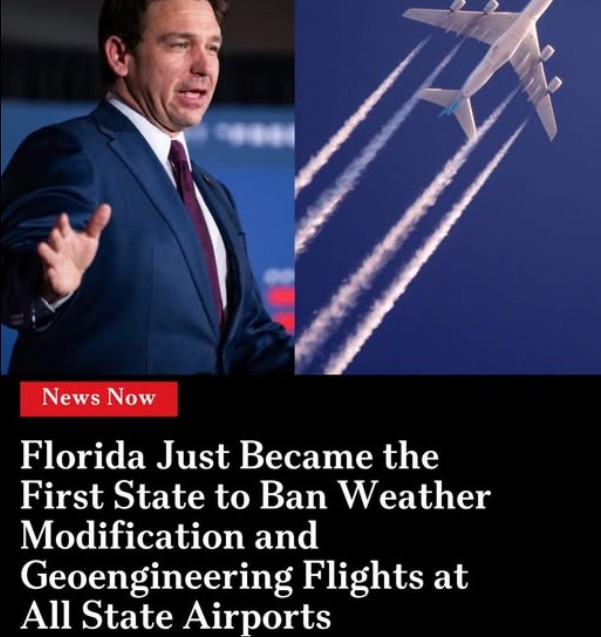
Florida has just made headlines for a law that has people on opposite sides of the spectrum talking about the same issue, albeit for very different reasons. The Sunshine State became one of the first in the country to officially criminalize weather modification and geoengineering with the passage of SB 56. The new law prohibits releasing any chemical or substance into the atmosphere with the intent to alter temperature, weather, climate, or sunlight intensity.
Florida Criminalizes Weather Modification: Scientists and Conspiracy Theorists React
At first glance, it sounds like a simple rule to protect the skies. But dig a little deeper, and it’s easy to see why the law is sparking debate among scientists and conspiracy theorists alike.
The Details of SB 56
Under this law, violating weather modification restrictions is treated as a third-degree felony. That means anyone caught could face up to five years in prison and fines up to $100,000. Publicly owned airports now have the responsibility to report any aircraft suspected of being equipped for weather modification. These reports are sent to Florida’s Department of Environmental Protection and law enforcement for further investigation.
Governor Ron DeSantis supported the bill, highlighting its bipartisan backing. Proponents argue that it adds much-needed transparency to activities in the skies and protects the public from unregulated experimentation. It sends a clear message: tampering with the atmosphere without oversight is a serious offense.
Scientists Voice Concerns
While supporters celebrate the law, many scientists worry about unintended consequences. Weather modification and geoengineering are active areas of research aimed at understanding and possibly mitigating climate change. Limiting the release of chemicals or substances in the atmosphere could hamper legitimate experiments designed to study rainfall patterns, reduce hurricane impact, or manage extreme heat.
Researchers fear that criminal penalties for conducting experiments could create a chilling effect. Labs and universities may be hesitant to pursue projects, even when they follow strict safety protocols. The concern is that in trying to prevent potential abuse, the law could inadvertently stifle scientific innovation and progress in climate research.
Conspiracy Theorists See Confirmation
On the other end of the spectrum, conspiracy theorists have taken the law as a form of validation. For years, theories about “chemtrails” and secret geoengineering programs have circulated online. To some, Florida’s law seems to confirm their long-held suspicions that governments are manipulating the weather. Social media platforms quickly filled with posts speculating about what other states might be doing and whether similar legislation should follow nationwide.
Balancing Transparency and Research
Florida’s new law sits at a unique crossroads. On one hand, it brings accountability to atmospheric activities, ensuring the public knows what is happening above their heads. On the other, it raises serious questions about the boundaries of scientific exploration and how best to regulate new technologies without hindering progress.
For residents, the law may initially seem abstract. But it underscores a larger conversation about climate, innovation, and government oversight. Whether you’re a scientist worried about research restrictions or someone intrigued by the mysteries of weather manipulation, SB 56 is a law that will likely continue to spark discussion for months to come.