ODosta Inc. Create Your Own Tech World

The Ha’ela satellite communications center attack shocked the world on March 10, 2026. Flames, shattered satellite dishes, and rising smoke painted a haunting scene south of Tel Aviv. A facility once filled with signals, satellites, and strategic military communications turned into twisted metal and rubble within minutes. Reports indicate the strike came from the Islamic Revolutionary Guard Corps as retaliation after Israel targeted an Iranian aerospace headquarters linked with satellite and missile programs days earlier. The image of broken antennas and scorched equipment tells a deeper story about modern warfare.
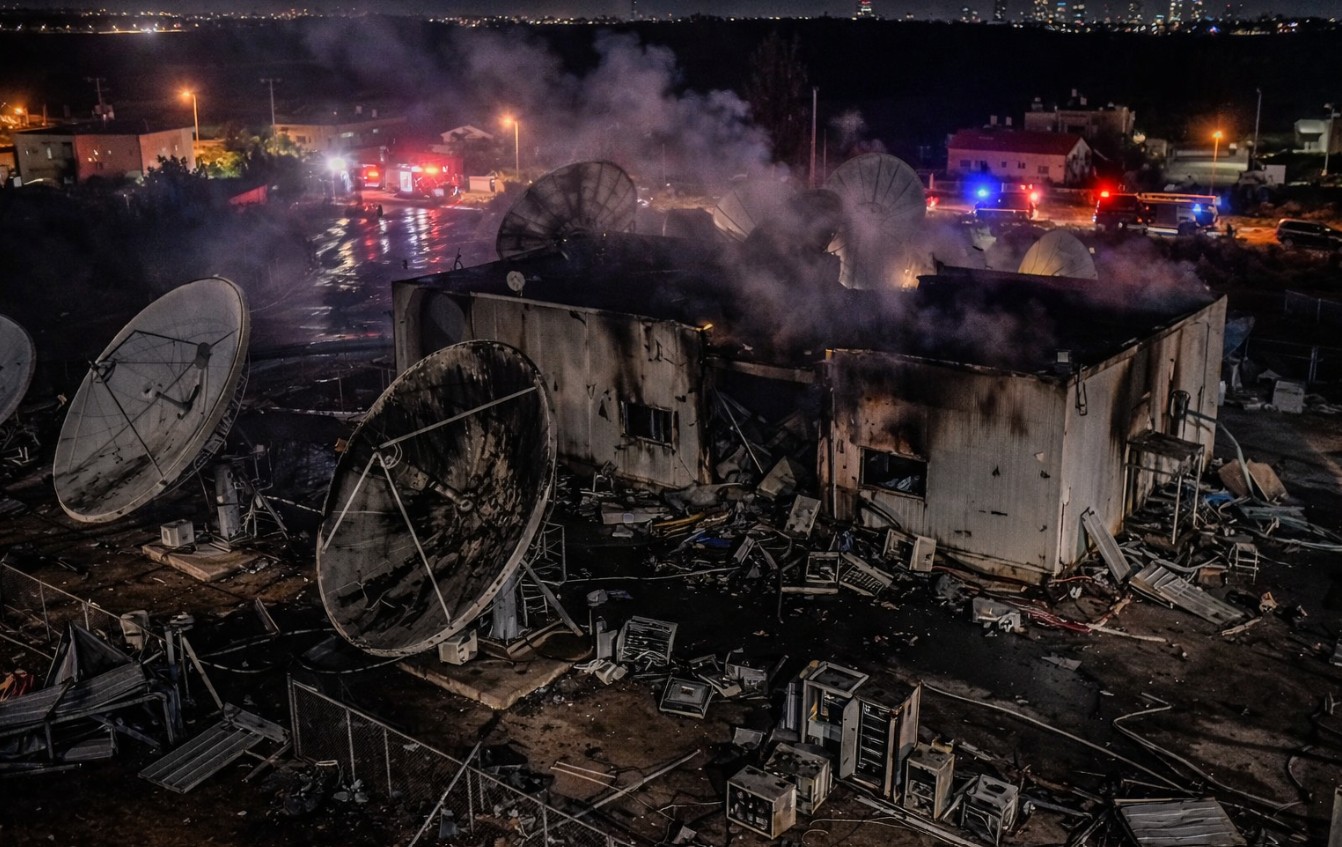
Ha’ela Satellite Communications Center Attack
This Photo Captured a War Moment where Technology once used for communication turned into a battlefield target. You stand before a moment in history where satellites, missiles, and geopolitical tension collide.
Smoke, Fire, and Silent Satellite Dishes
Satellite ground stations rarely attract attention from the public. They operate quietly behind fences and security gates. Yet when war reaches these facilities, the consequences become visible to everyone. In the photograph, thick smoke rises from damaged buildings while emergency crews work under flashing lights.
Large communications dishes dominate the scene. Some appear crushed or bent. Others sit motionless while debris covers the surrounding area. These antennas once handled data transmissions, intelligence feeds, and communication signals between aircraft and command centers.
Moments earlier those systems carried vital information across thousands of kilometers. Then a missile strike changed everything. Flames replaced signals. The silent dishes now resemble broken sculptures scattered across the site. The image therefore captures both physical damage and symbolic loss. It shows how fragile the infrastructure behind modern warfare truly remains.
What Was the Ha’ela Satellite Communications Center
Role in Israel’s Military Network
The Ha’ela satellite communications center, located south of Tel Aviv near Beit Shemesh, served as an important communications hub. The facility connected Israeli military aircraft, command centers, and satellite networks. Such installations enable long range communication across continents and oceans.
Modern fighter jets rely on constant data exchange. Pilots receive intelligence updates, navigation guidance, and battlefield information through satellite links. Ground stations like Ha’ela process these signals before sending them to orbiting satellites.Inside the complex, technicians and communication specialists manage advanced electronic equipment. Satellite antennas track orbiting spacecraft while transmitting encrypted data signals. These signals travel thousands of kilometers above Earth before reaching other ground stations or military platforms.
Because of this role, satellite communication centers represent strategic infrastructure. They form the backbone of real time coordination across military forces. Destroying such a hub disrupts communication flows and complicates operational planning.
Why Satellite Communication Facilities Matter
Modern warfare depends on information. Missiles, drones, and aircraft require guidance and coordination. Satellite communication systems deliver this information across enormous distances. Without them, forces lose situational awareness.Imagine trying to conduct complex operations without instant communication between command centers and pilots. Confusion spreads quickly. Decisions slow down. That risk explains why military planners place enormous value on communication infrastructure.
Satellite ground stations therefore operate as critical nodes within defense networks. They connect satellites, radar systems, intelligence platforms, and command units. Destroying one station rarely ends communication entirely, yet it weakens network resilience.
The Ha’ela center played exactly such a role. Its antennas handled streams of data connecting aircraft and command networks. Removing that capability even temporarily carries operational consequences. The destroyed dishes in the photograph therefore represent more than broken equipment. They symbolize a direct strike against the information backbone of modern defense systems.
Timeline of the March 10, 2026 Attack
The Strike That Hit South of Tel Aviv
On March 10, 2026, reports began emerging about a powerful strike near the satellite communications facility south of Tel Aviv. Iranian forces announced that the attack formed part of a larger retaliatory campaign targeting Israeli infrastructure and military systems. This retaliation followed Israeli strikes on Iranian military installations connected with missile and satellite programs days earlier. Israeli forces targeted the IRGC aerospace headquarters, which functioned as a command center for Iran’s space and missile operations.
The sequence of attacks reflects a pattern common in modern conflict. One strategic strike leads to another. Each side attempts to weaken critical infrastructure belonging to the opponent.
Missiles or explosive drones reportedly struck the Ha’ela communications center during this phase of the conflict. The impact caused severe structural damage across the facility. Satellite dishes collapsed. Buildings caught fire. Emergency services rushed toward the site as flames illuminated the night sky.
Immediate Damage and Emergency Response
After the strike, emergency responders moved quickly toward the damaged complex. Fire crews attempted to contain flames spreading through communication buildings. Security teams secured the perimeter while assessing damage.
The photograph showing the destroyed station likely emerged during these early hours. Smoke still rises from the damaged structures. Fire trucks line nearby roads. Red emergency lights reflect off shattered metal equipment. Early assessments indicated severe structural damage across the facility. Several satellite antennas appear completely destroyed while surrounding infrastructure lies scattered across the ground.
Communication equipment inside the buildings likely suffered heavy damage as well. Satellite signal processors, power units, and network hardware remain sensitive to explosions and fire. Even minor structural damage often disrupts these systems. The attack therefore represented both physical destruction and operational disruption. Within minutes, a facility built for communication turned into a scene of chaos.
Why the IRGC Targeted This Facility
Retaliation After Israeli Aerospace Headquarters Strike
The strike on the Ha’ela communications center formed part of a larger chain of escalation. Days earlier, Israeli forces targeted Iran’s IRGC aerospace headquarters connected with satellite development and missile research.
This facility supported Iran’s space technology programs including satellite launches such as the Khayyam satellite. These systems provide surveillance and intelligence capabilities that hold strategic value.
Iran viewed the Israeli strike as an attack on its technological and military infrastructure. The response therefore focused on similar categories of targets. Satellite communication facilities became obvious candidates.
Military strategy often follows the principle of symmetrical retaliation. If one side strikes aerospace infrastructure, the other side responds against comparable systems. This pattern aims to impose strategic costs while signaling capability.
The Ha’ela communications center fit perfectly within this logic. As a communications node supporting military operations, it represented a high value target during escalating conflict.
Strategic Importance of Satellite Infrastructure
Satellite infrastructure stands among the most important assets in modern military operations. Navigation, intelligence gathering, communication, and surveillance all rely on satellite networks. Ground stations serve as entry points for these systems. They transmit commands to satellites and receive data transmitted back to Earth. Without these ground nodes, satellites lose operational effectiveness.
Attacking a satellite ground station therefore carries strategic significance. Even if satellites remain intact in orbit, communication disruption reduces their usefulness. This explains why missile strikes increasingly target communication infrastructure during modern conflicts. Destroying a satellite dish might appear minor compared with destroying aircraft or tanks. Yet the consequences ripple across entire networks. The Ha’ela strike therefore demonstrates how warfare now extends beyond traditional battlefields. Antennas, data links, and communication hubs have become strategic targets.
The Escalating Conflict Between Israel and Iran
Strikes on Aerospace and Satellite Programs
The conflict leading to the Ha’ela strike reflects growing tension between Israel and Iran over military technology and regional influence. Israeli forces previously targeted Iranian aerospace facilities connected with missile and satellite development.These facilities supported programs capable of launching satellites into orbit. Some analysts believe such technology also contributes to long range missile development.
Iran viewed these strikes as an attempt to cripple its strategic capabilities. Retaliatory attacks followed quickly. Satellite communications centers, energy facilities, and military bases became targets. The Ha’ela strike therefore represents one chapter in a larger confrontation involving advanced technology and geopolitical rivalry.
Expanding Military Targets
As conflicts escalate, target lists expand. Initial strikes focus on military infrastructure. Later phases often include communication networks, energy systems, and strategic industries. This pattern appears visible in the broader conflict between Israel and Iran. Both sides have targeted facilities linked with missile systems, satellites, and energy production.
Each strike sends a message of capability and resolve. Yet each attack also increases the risk of wider regional confrontation. The destruction visible in the Ha’ela photograph therefore symbolizes more than a single event. It represents the expanding boundaries of modern conflict.
Conclusion
The haunting photograph of the destroyed Ha’ela satellite communications center captures a defining moment in modern conflict. Broken satellite dishes, burning buildings, and flashing emergency lights reveal how warfare now targets the infrastructure behind global communication. The strike formed part of a broader chain of retaliation between Israel and Iran involving aerospace programs, missiles, and satellite technology. What once served as a silent communication hub turned into a symbol of vulnerability. The image reminds you how fragile advanced technology becomes during geopolitical confrontation. Behind the twisted metal lies a deeper story about power, retaliation, and the growing role of space infrastructure in global security.