ODosta Inc. Create Your Own Tech World

Why is the United States actively preparing for a potential conflict in the southern Caribbean?
To understand what is unfolding, one must look beyond headlines and focus on something far more revealing: the rapid reactivation of Cold War, era military infrastructure that has remained dormant for decades.
Across Puerto Rico and the U.S. Virgin Islands, facilities once thought permanently retired are being transformed back into forward operating bases. This shift suggests not routine military exercises, but preparation for a major contingency one centered on Venezuela and the broader geopolitical struggle involving Russia and China.
The Return of Strategic Bases
One of the clearest indicators is Roosevelt Roads Naval Station in Puerto Rico. Once the largest U.S. naval base in the world, it was officially closed in 2004. Today, credible reports indicate the facility is being rapidly brought back online. What was a civilian zone is once again becoming a strategic military hub capable of supporting air, naval, and logistics operations just minutes from northern South America.
Similarly, Henry E. Rohlsen Airport in the U.S. Virgin Islands, long associated with tourism is being reconfigured into a logistics node capable of handling heavy military transport aircraft. This infrastructure is critical for sustained operations, not symbolic posturing.
These developments raise an obvious question: why now?
The Twin Triggers: Geopolitics and Oil
Two primary factors appear to be driving U.S. urgency.
1. Russia and China in Venezuela
Intelligence assessments suggest that Moscow and Beijing are not merely conducting diplomatic visits to Venezuela. Instead, they are exploring the establishment of permanent military or intelligence facilities. From Washington’s perspective, this crosses a historic red line.
For over a century, the Monroe Doctrine has defined U.S. strategic thinking in the Western Hemisphere. Foreign military bases near U.S. territory, especially from peer competitors are viewed as an existential threat.
2. Oil and Economic Pressure
Venezuela’s oil remains central to its regime survival. Recent U.S. Coast Guard actions, including the interception and seizure of oil tankers leaving Venezuelan waters, indicate an economic strangulation phase already underway. Historically, such measures often precede open conflict by cutting off funding before military engagement begins.
Naval Forces Already in Position
If this were merely a blockade, the current force posture would look very different. Instead, the U.S. Navy appears to have assembled a deliberate kill chain near Puerto Rico and Trinidad.
-
USS Jason Dunham (Arleigh Burke–class destroyer)
Beyond its missile capability, this ship functions as an advanced electronic warfare platform, tasked with jamming Venezuelan communications and blinding coastal radar systems during the opening phase of a conflict. -
USS Stockdale (Arleigh Burke–class destroyer)
Acting as the shield, it provides Aegis-based missile defense to intercept anti-ship or cruise missile threats aimed at the fleet. -
USS Wasp–class amphibious assault ship
The presence of a large amphibious vessel is a decisive indicator. These ships exist for one purpose: putting Marines ashore. They are not deployed unless planners anticipate boots on the ground.
Closing the Back Door: Trinidad and Tobago
The operation is not confined to the north. U.S. naval assets are using waters near Trinidad and Tobago to control the Gulf of Paria, Venezuela’s maritime escape route to the Atlantic.
-
USS Gravely functions as a maritime sentinel, preventing submarines, fast attack boats, or smuggling vessels from slipping into open sea lanes.
-
USS Lake Erie (Ticonderoga-class cruiser) serves as the command-and-control hub, coordinating air defense, fleet movements, and missile engagement across the entire operational theater.
Air Power: Speed, Reach, and Precision
Naval forces establish control but air power delivers the first decisive blows.
-
B-52 Stratofortress bombers would launch directly from the continental United States, firing long-range cruise missiles without ever landing in the Caribbean.
-
B-1B Lancer bombers, operating at high speed and low altitude, are designed to eliminate hardened targets before defenses can react.
-
MQ-9 Reaper drones would loiter for hours, hunting mobile missile launchers and command vehicles.
-
F-35 Lightning II stealth fighters would act as “door kickers,” penetrating Venezuelan airspace to destroy S-300 air defense systems and open corridors for follow-on aircraft.
-
V-22 Osprey tiltrotors, launching from both ships and Puerto Rico, would insert special forces deep behind enemy lines.
-
KC-130 tankers ensure sustained air operations by refueling aircraft mid-mission.
All of this relies on Roosevelt Roads and Rohlsen Airport as logistical lifelines.
Why Amphibious Ships Matter
Destroyers and cruisers are lethal but they cannot occupy territory. That role belongs to amphibious assault ships, which resemble small aircraft carriers but are optimized for deploying Marines, helicopters, landing craft, and F-35B jets.
Thousands of Marines aboard these ships are trained for rapid expeditionary warfare: seizing airports, ports, communication hubs, and cartel strongholds. Their mission would likely involve precision strikes rather than prolonged occupation.
The Silent Threat: Submarines and Surveillance
A nuclear-powered attack submarine would operate unseen along Venezuela’s coast, intercepting communications, tracking naval movements, and delivering surprise missile strikes. Its mere presence deters outside intervention from countries such as Russia or Iran.
Meanwhile, P-8 Poseidon aircraft extend surveillance across vast areas, coordinating with surface ships and submarines to track air defenses, naval units, and narcotics trafficking routes.
Venezuela’s Likely Response
Venezuela cannot match U.S. technology, but it is not defenseless.
-
Layered air defenses, local terrain knowledge, and coastal patrols complicate U.S. operations.
-
A militia force reportedly numbering over 4.5 million could be mobilized to resist amphibious landings and defend infrastructure.
-
Drug cartels, intertwined with elements of the state, would exploit jungle terrain, fast boats, and civilian traffic to evade surveillance and disrupt logistics.
This creates a hybrid battlefield combining conventional military resistance with asymmetric warfare and criminal networks.
The Russia Factor
Russia is likely to support Venezuela indirectly, potentially supplying long-range drones such as Shahed-type loitering munitions. These systems could target airfields, logistics hubs, or command centers, increasing costs for U.S. forces without direct confrontation.
A Decision Already in Motion?
When bombers are on standby, amphibious ships are deployed, submarines are lurking offshore, and Cold War bases are reactivated, the implication is hard to ignore. This looks less like contingency planning and more like preparation for execution.
Whether conflict is inevitable remains uncertain. But the infrastructure, forces, and strategies now visible in the Caribbean suggest that Washington is preparing for the possibility that diplomacy may fail and that the decision point is approaching fast.
Conclusion
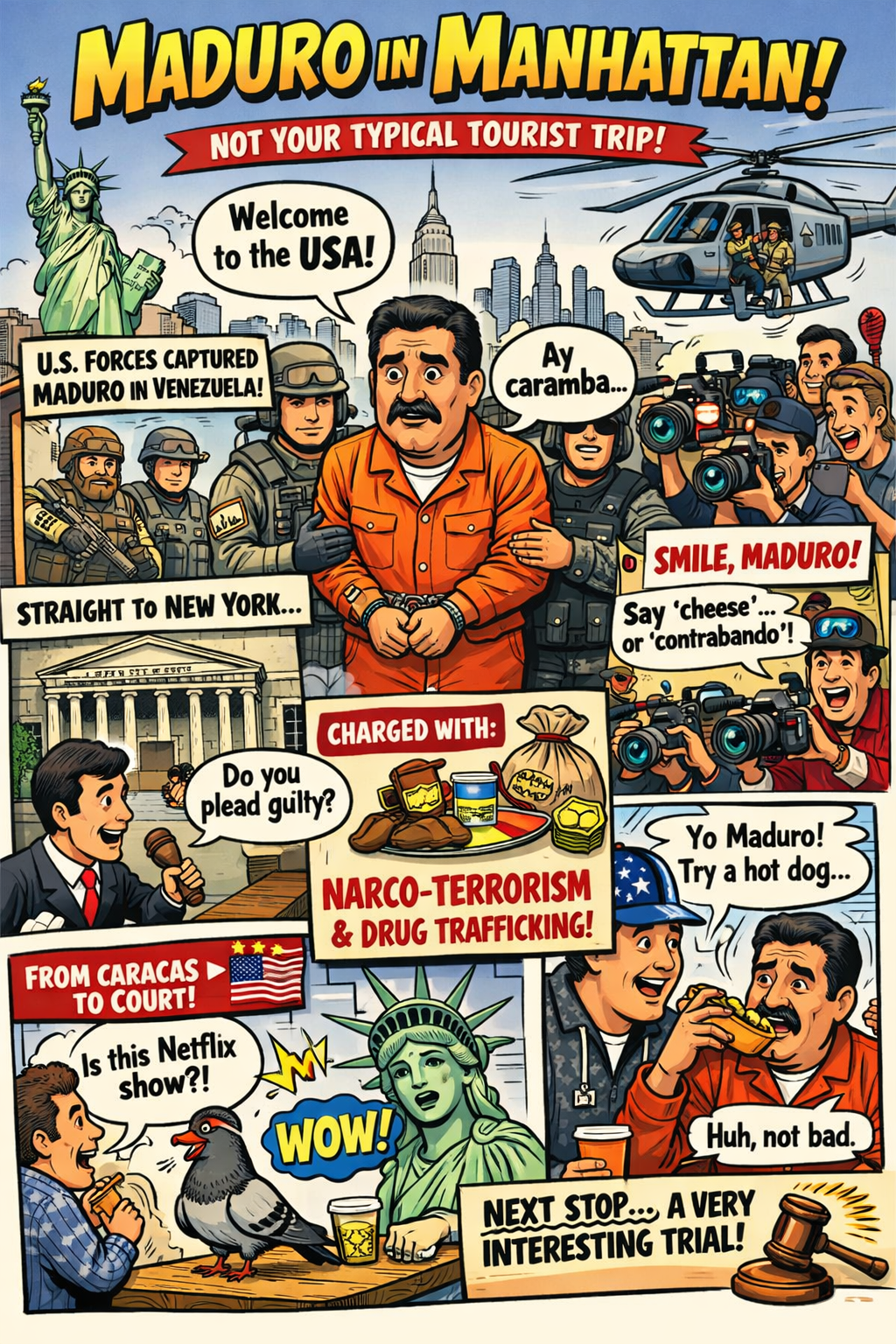
Reports that Venezuela’s leader Nicolás Maduro was exfiltrated in a special forces operation, followed by President Trump openly discussing U.S. interventions in places like Colombia, Cuba, Mexico, and even Greenland, have shocked many observers. Trump has framed these actions under what he calls the “Dunro Doctrine,” declaring the Western Hemisphere to be America’s domain.
While the rhetoric feels dramatic, the underlying idea is anything but new.
The so-called Dunro Doctrine is a deliberate play on the Monroe Doctrine, first articulated in the early 1820s. President James Monroe originally suggested that European powers should refrain from interfering in the Americas. At the time, it was little more than a statement of preference, not a law, not a treaty, and not enforceable. Yet over the decades, that idea hardened into a justification for U.S. intervention, regime change, and coercive influence across Latin America and the Caribbean.
By the late 19th and early 20th centuries, the United States had transformed itself through conquest, war, and expansion, displacing Native nations, defeating European rivals, purchasing territory, and fighting the Mexican-American War. When territorial expansion at home slowed, U.S. leaders began looking outward. President Theodore Roosevelt’s Roosevelt Corollary reframed the Monroe Doctrine to argue that the U.S. not only could but should police the hemisphere to prevent foreign influence.
This shift marked the rise of informal empire. Instead of annexing territory, the U.S. used military force, economic pressure, and political manipulation to control customs houses, oil production, trade routes, and governments, often while allowing local leaders to remain nominally in charge. From Guatemala to Panama to Venezuela, this approach combined shows of force with destabilization, coups, and economic leverage.
Trump’s language may sound unusually blunt, especially when he speaks openly about oil or annexation, but historians note that the strategy itself fits a long American tradition. What feels different today is the lack of diplomatic framing. Previous administrations cloaked interventions in the language of rules, democracy, or global order. Trump often dispenses with that pretense entirely.
Seen through history, today’s events are less a radical break than a return to an older, more explicit version of U.S. power politics in its so-called backyard, one that raises familiar questions about sovereignty, stability, and the long-term consequences of intervention in the Americas.